

Solomon Islands is one of the most climate-vulnerable countries in the world. Rising sea levels, droughts, cyclones and other climate-related hazards threaten food security, livelihoods and children's wellbeing across rural communities.
Save the Children's Climate Adaptation, Resilience and Empowerment (C-CARE) programme helps communities strengthen their resilience through climate-smart agriculture, disaster preparedness, food processing and livelihood development.
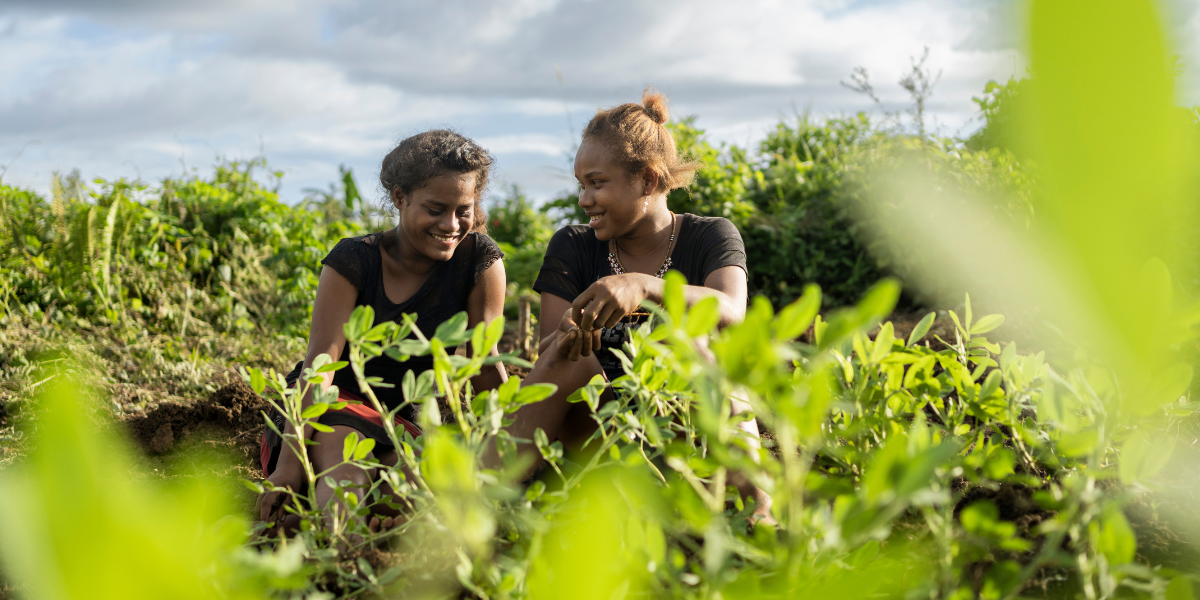
Katherine, 15, and Linda, 17, chatting in a community garden in Malaita Province, the Solomon Islands.
Why families in Solomon Islands need support
Around 80% of Solomon Islanders live in rural communities and depend on gardening and agriculture for food and income. Climate change is reducing soil fertility, damaging crops and making food production increasingly difficult.
Repeated droughts, cyclones and sea level rise have affected household food security, creating additional challenges for families already vulnerable to poverty and isolation.
Save the Children's C-CARE Programme
Save the Children has worked with families in 16 communities to build practical skills for climate adaptation and resilience.
Families have learned climate-smart gardening techniques including:
- Raised-bed gardening.
- Composting and mulching.
- Seedling nursery establishment.
- Shade management for crops.
- Use of resilient seed varieties.
- Water storage and irrigation solutions.
Demonstration gardens allow communities to develop practical skills while seeing results firsthand.
The programme also supports food processing and preservation, helping communities reduce food insecurity through techniques such as drying fruits, vegetables and root crops.
Women's economic empowerment is another key component. Participants receive financial literacy training and support to establish small businesses including food processing, livestock raising, baking and retail activities.
How we know we're making a difference
The programme has increased community resilience while creating new economic opportunities for families.
Income from gardens and small businesses has helped families purchase seeds, pay school fees, buy household essentials and invest in their futures.
Community-led adaptation planning has strengthened disaster preparedness, while training for Village Disaster Climate Risk Committees has helped communities take ownership of local climate adaptation efforts.
Impact snapshot
- 16 communities supported through climate adaptation activities.
- Over 240 people trained in food processing and preservation.
- More than 260 community disaster committee members trained.
- Community adaptation plans developed across participating locations.
- Women's businesses established through financial literacy and livelihood support.
- Demonstration gardens and nurseries established to promote climate-smart agriculture.
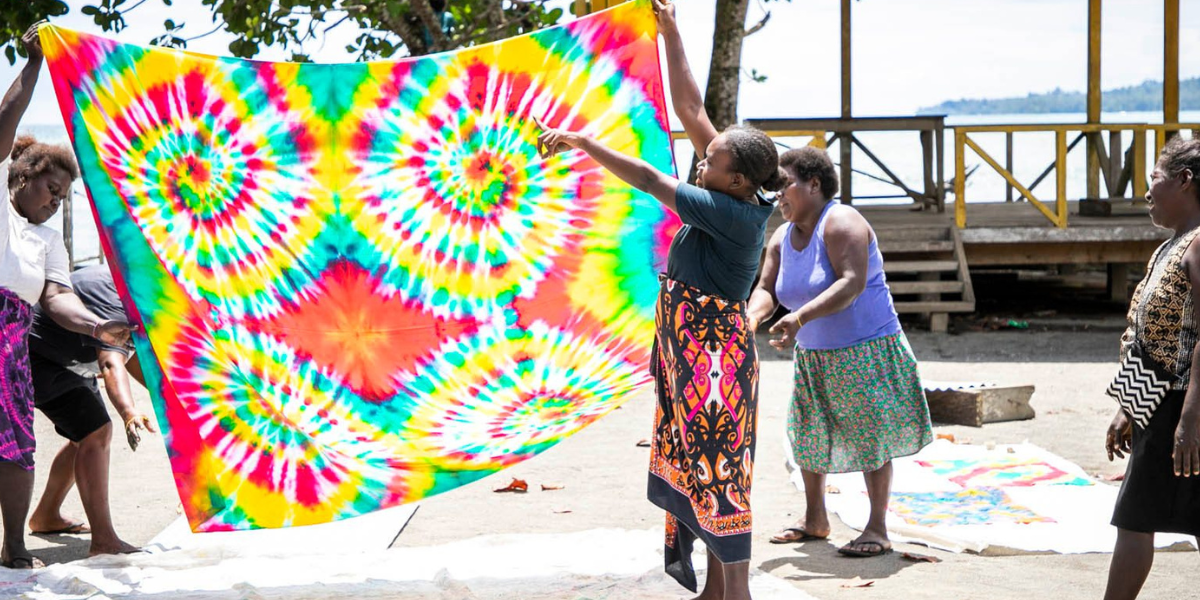
Meet Emily
Emily is from a remote community in Solomon Islands participating in Save the Children's Climate Change Adaptation, Resilience and Empowerment (C-CARE) programme.
As part of the project, women's groups are being supported to establish climate-resilient small businesses that can generate income while strengthening community resilience. Emily's group received linen and fabric-dyeing equipment, enabling them to start a new business serving neighbouring communities.
“Since we started, we've already received orders from other villages to dye pillowcases, blankets, bedsheets and other clothes and linen,” Emily says.
The growing demand for their products is creating new economic opportunities for women while helping families diversify their income sources in the face of climate-related challenges. This year, Save the Children staff will continue supporting Emily and her group with additional coaching, mentoring and resources as they work to expand their business and increase its long-term sustainability.
This support is helping women strengthen their livelihoods, contribute to their household income and build more resilient futures for their families and communities.
Who makes our programme possible
This programme is supported by the New Zealand International Development Cooperation Programme and made possible through the generosity of donors and partners who are helping communities in Solomon Islands adapt to climate change, strengthen livelihoods and protect children's futures.